
☰
How Accurate Are Phone and Watch Step Counters?
Step-counter accuracy depends on the device, where it is worn and the activity being measured. There is no single error percentage for every phone or watch.
Use our Miles to Steps Calculator to apply your own measurement.
Counting steps and estimating distance are separate jobs
A device can count footfalls and still estimate a different distance because it assumes another step length. A distance-to-steps calculator does the reverse arithmetic; it cannot validate a sensor. Use the Step Length Calculator to check your own length first.
What a controlled study tells us
Case and colleagues’ 2015 research letter compared selected apps and devices with directly observed treadmill steps. Results differed between devices. The small sample, controlled walking trials and older hardware mean those findings should not be treated as accuracy ratings for today’s watches or everyday activity.
A simple personal spot-check
- Note your device’s starting step count.
- Walk a counted route, using an observer or a tally counter if practical.
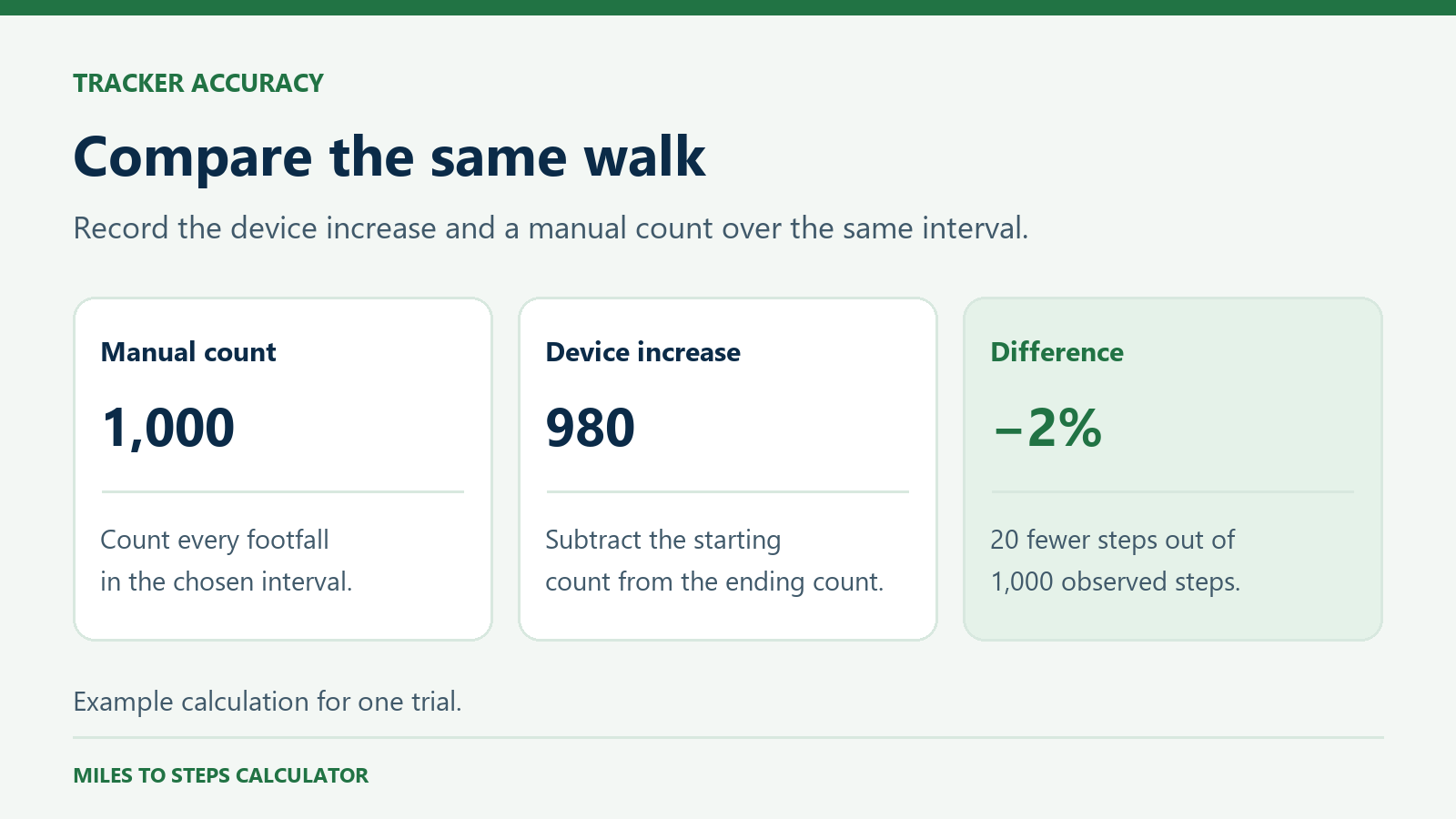
- Compare the device’s increase with the observed footfalls.
- Repeat in your usual device position and at a different normal walking pace.
Percentage difference = (device steps − observed steps) ÷ observed steps × 100. A result of 980 versus 1,000 observed steps is −2%. This checks those trials only.
Interpret changes cautiously
Use consistent wearing position, device settings and measurement periods when comparing days. Carrying a phone differently or changing the activity can change the comparison. A personal check does not establish medical accuracy, diagnose a movement issue or validate calorie estimates.
Method and corrections
Source records and calculation assumptions are in Methodology, Sources and Limits. Report an error or suggest a correction.
Try the main calculator
Convert miles or kilometres into steps with your measured step length or a rough walking estimate.
Open the Miles to Steps Calculator